Week 02 · September 28, 2026
Building the Light Bank
The plumbing and rack are sorted. I’ve got three more Radions on the floor, five lights total, and the cycle is finally moving.
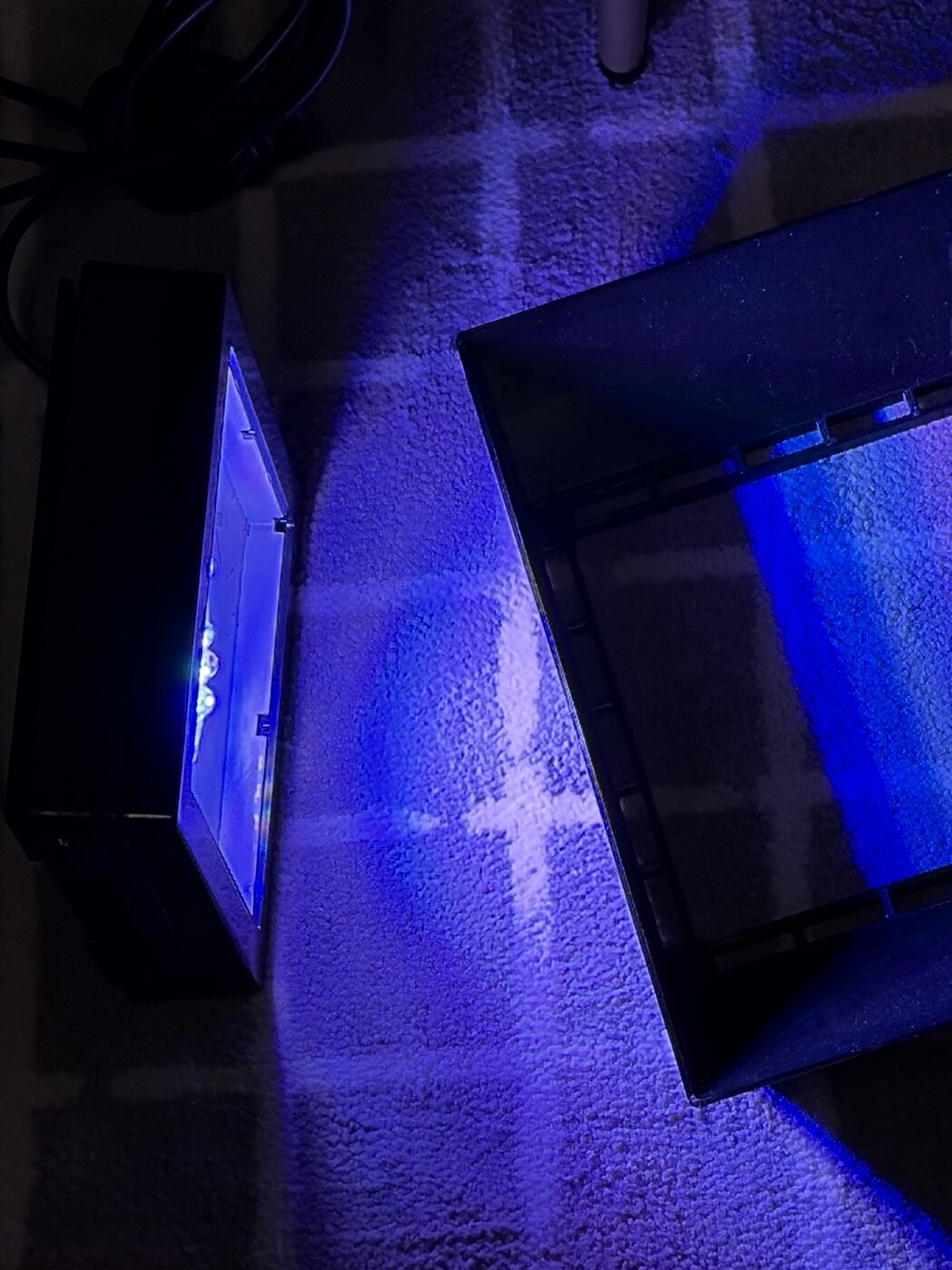
Week one ended with the farm circulating, the return plumbing glued, the drain protected, and the multilevel rack finally staying where I put it. Those are no longer open problems.
Three more Radions arrived today. They look different from the two I already had, so I need to figure out which generations they are and how I’m mounting them. Five lights might be the plan, or I might keep one as a spare.
The cycle is becoming a cycle
Finally, something besides ammonia. I’m seeing nitrite and nitrate now. Still waiting for the system to be ready for coral, but at least the numbers are moving.
I dosed more Stability and I’m keeping up with the tests. I want ammonia and nitrite staying at zero with the fish already in here before I add cleanup crew or coral.
September 28 night test
Tonight's September 28 readings were ammonia 1 ppm, nitrite 0.25 ppm, and nitrate 5 ppm. I dosed more Activate afterward and may do a water change in the morning. The nitrate reading is now corrected in the cycle record.
September 29: another water change
Ammonia had climbed back to about 2 ppm, so I did another small water change. The post-change test settled at 1 ppm ammonia, 0.25 ppm nitrite, and approximately 5–10 ppm nitrate. I am continuing to dose Activate while the biofilter catches up. Nitrite is present but has stayed modest rather than producing the dramatic spike I expected.
Radion update trouble
Well... two of the new Radions stopped turning on after I updated them. They flash red once, then nothing. So now I’m troubleshooting lights again. I still need to confirm the models before I settle on the layout.
October 1: ammonia keeps falling
October 1 tests: ammonia roughly 0.5–1.0 ppm, nitrite 0.25 ppm, and nitrate 5–10 ppm. Ammonia is coming down. Now I need to leave things stable and be patient. My favorite part.
October 3: getting close
October 3 tests: ammonia about 0.25–0.5 ppm, nitrite about 0.25–0.5 ppm, and nitrate roughly 10–20 ppm. Getting closer. It feels good to finally see ammonia lower and nitrate climbing.
The tank is starting to look less sterile too. The socks are turning brown and the skimmer is starting to show some activity. I’m out of bottled bacteria, so for now I’m mostly leaving it alone.
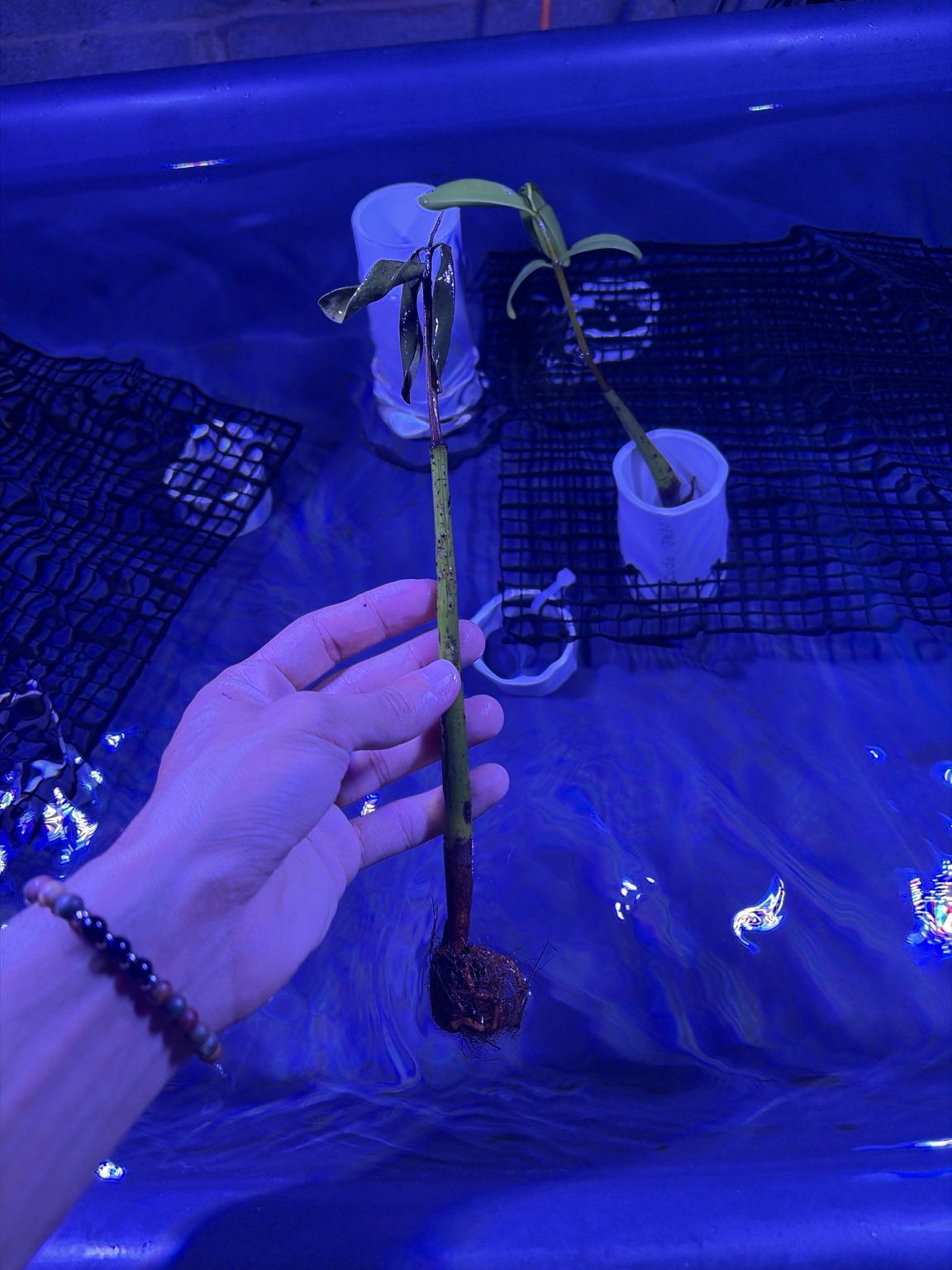
Mangrove update
One mangrove isn’t doing well. The other still looks healthy. I cut a hole in the frag rack to hold its PVC support upright, which keeps it sitting much better.
Resolved going into week two
I’ve got a strainer on the main drain now, and the multilevel rack is built and staying put. Finally. I still need to keep the strainer clear, but those two jobs are handled.
October 4: Alquatics moves to Cloudflare
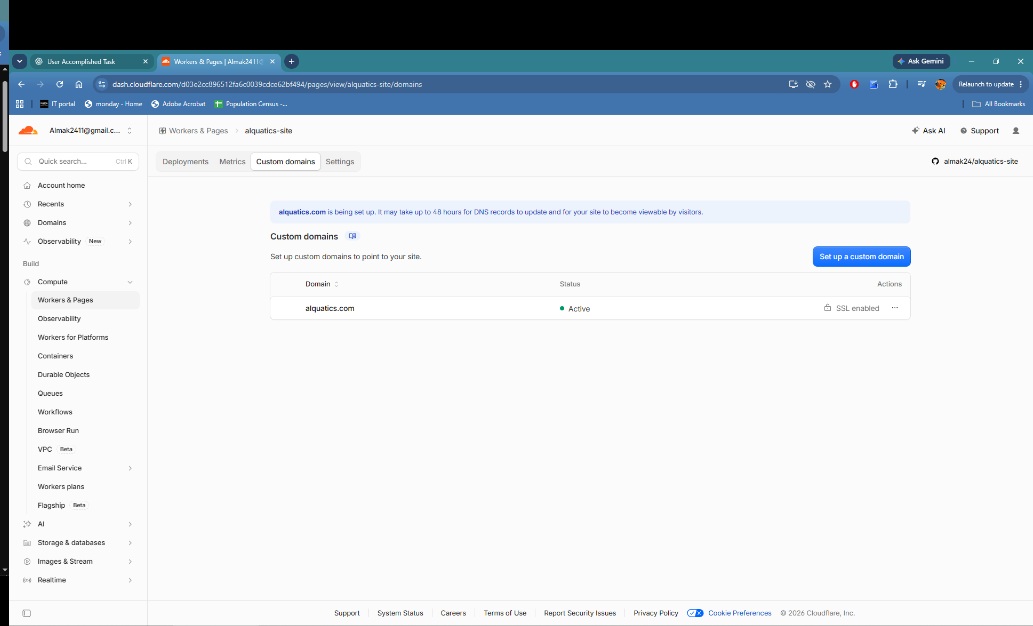
I moved the site from Netlify to Cloudflare Pages today. Alquatics.com is connected to GitHub and running with SSL.
The part I care about: I can update the site again without running into Netlify’s deploy credits. Water tests, photos, whatever happened that day. I can actually keep this log current.
I tested it by adding the October 1 and October 3 water readings and updating this entry. The changes showed up on the live site. FINALLY.
What comes next
Next up: keep the temperature steady, keep testing, sort out the Radions, and wait for the cycle. I want coral in here, but I’m not there yet.
Comments